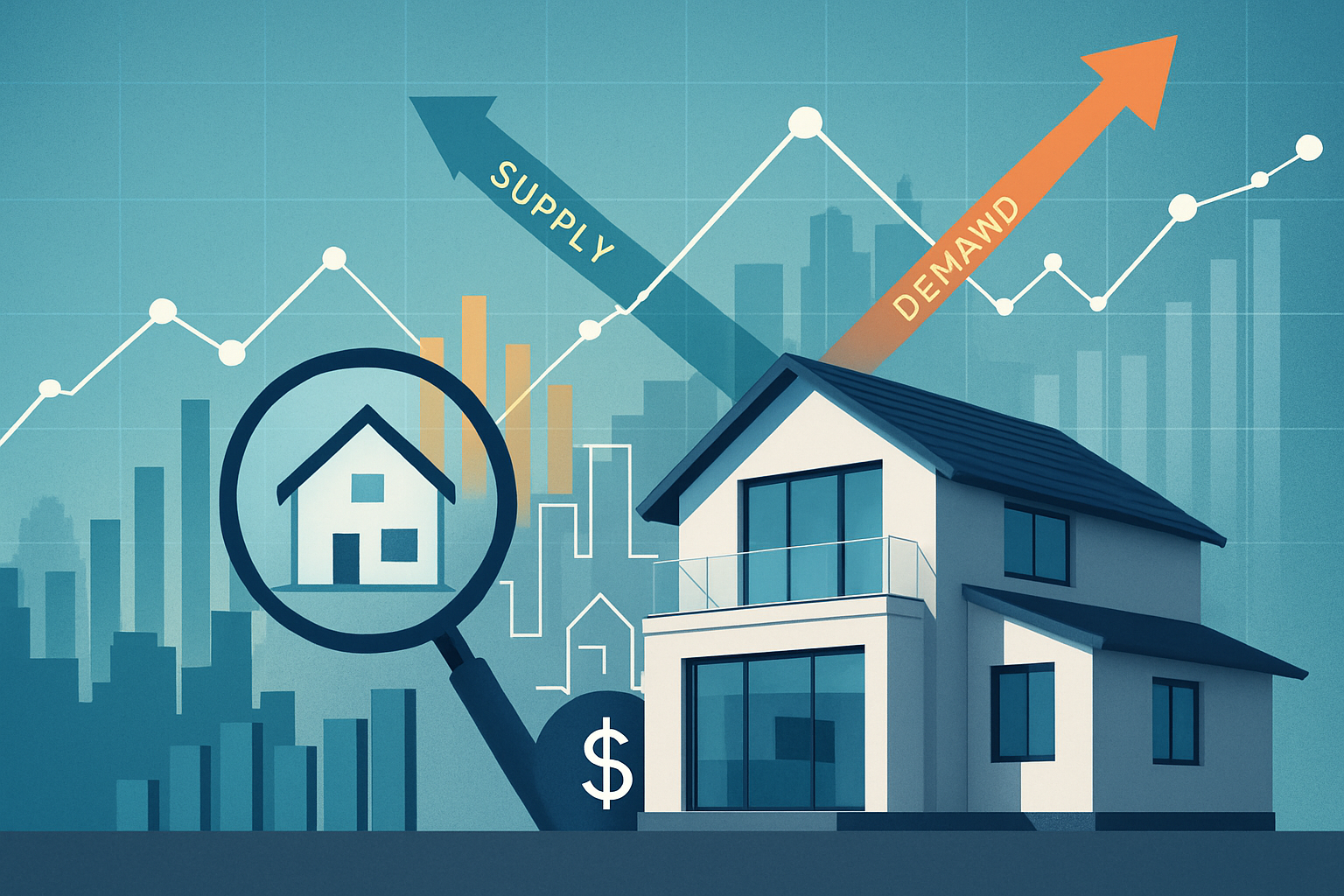
A visual representation of price discovery as market forces, data, and buyer behavior shape real estate value in real time.
Introduction: Why Price Discovery Matters Now
Price discovery is one of the most important concepts in real estate, yet it’s often misunderstood. It explains how a property’s value is revealed in the open market. In simple terms, price discovery is the process where buyers and sellers determine what a property is worth at a specific moment. That value emerges through activity, not opinion.
Because interest rates, inventory, and buyer behavior keep shifting, price discovery is always in motion. Understanding it helps owners price smarter, buyers negotiate better, and investors reduce risk.
Price Discovery in Real Estate: A Clear Definition
Price discovery in real estate refers to the market-driven process that establishes a property’s acceptable price. It happens when supply, demand, and real transactions intersect. Unlike retail goods, real estate has no fixed price tag. Each property is unique, and value must be tested in the market. Therefore, price discovery occurs through:
- Listings
- Showings
- Offers
- Negotiations
- Final sale prices
The closing price becomes the strongest signal of value at that time.
Supply and Demand: The Core Engine of Price Discovery
Supply and demand form the foundation of price discovery. Without them, prices have no anchor. When inventory is tight and demand is strong, buyers compete. As a result, prices tend to rise. However, when listings surge and buyers hesitate, sellers lose leverage. Then prices soften.
For example:
- Low mortgage rates often increase demand
- Rising rates typically reduce buyer capacity
- New construction can expand supply quickly
Each shift forces the market to recalibrate value. Because conditions change fast, price discovery is never permanent.
Comparable Sales: Anchoring Value With Real Data
Comparable sales, often called “comps,” are critical to price discovery. They provide evidence, not speculation. A comp is a recently sold property that closely resembles the subject property. Location, size, condition, and amenities all matter. Appraisers and agents adjust comps to reflect differences. This helps define a realistic pricing range. However, comps are backward-looking. They reflect what did happen, not what will happen. That’s why comps guide price discovery but don’t control it entirely.
Negotiation and Offers: Where Price Discovery Accelerates
Price discovery sharpens once a property hits the market. That’s when real buyers reveal real willingness to pay. Every showing provides feedback. Every offer sends a signal. Multiple offers usually indicate underpricing or strong demand. Few or no offers suggest resistance at the current price.
Counteroffers, concessions, and contract terms further refine value. Price discovery intensifies until buyer and seller agree. Importantly, the accepted price matters more than the list price. The market speaks through execution.
Market Information and Expectations Shape Perceived Value
Price discovery does not occur in a vacuum. Broader market forces influence decisions constantly. Buyers and sellers consider:
- Interest rates
- Job growth
- Wage trends
- Lending standards
- Tax policy
- Zoning changes
Future expectations also play a role. If buyers expect prices to fall, they pause. If they expect appreciation, they act faster. Therefore, price discovery blends hard data with forward-looking judgment.
Appraisals and Valuation Tools: Guardrails, Not Guarantees
Professional valuation tools support price discovery. They do not replace it. Appraisals, broker price opinions, and AVMs provide structured estimates. They help lenders manage risk. However, these tools rely on past data and assumptions. They often lag fast-moving markets. In bidding wars, appraisals may come in low. In declining markets, they may come in high. Thus, valuation tools frame price discovery but do not dictate it.
Why Price Discovery Is Dynamic, Not Fixed
A common mistake is assuming value is stable. In reality, price discovery is continuous. New information enters the market daily. Rates change. Inventory shifts. Sentiment evolves. Because of this, a property’s value today may differ next month. Sometimes it changes in weeks. That’s why timing matters in real estate. Price discovery reflects the current moment, not historical averages.
How Price Discovery Affects Buyers, Sellers, and Investors
Understanding price discovery creates leverage.
For sellers:
It prevents overpricing, which leads to stagnation. It also helps capture upside in strong markets.
For buyers:
It reveals when competition is real or fading. It strengthens negotiation strategy.
For investors:
It reduces entry risk. It clarifies exit timing.
In every case, price discovery rewards those who watch signals closely.
Summary: The Real Power of Price Discovery
Price discovery is the market’s way of answering one question:
What is this property worth right now?
The answer emerges through supply, demand, comps, negotiations, expectations, and data. It is revealed, not declared. Because conditions change, price discovery never stops. Those who understand it make better decisions with less emotion.
Call to Action:
If you’re buying, selling, or investing, don’t guess value.
Study price discovery—and let the market speak before you act.
About the Author