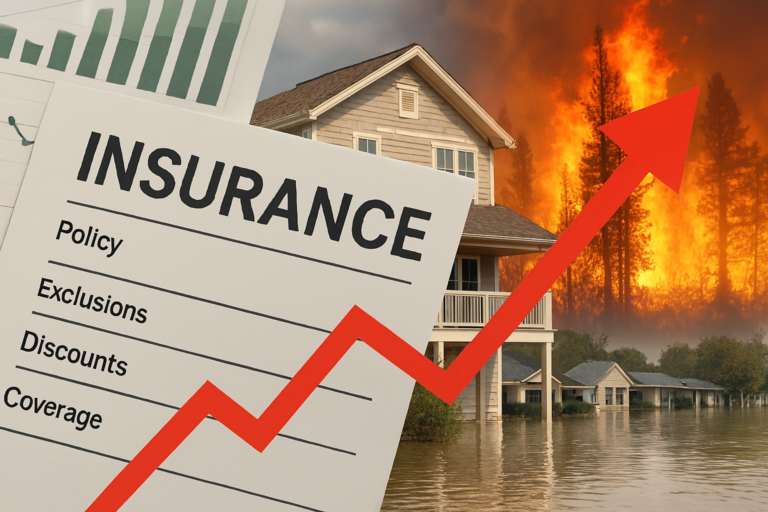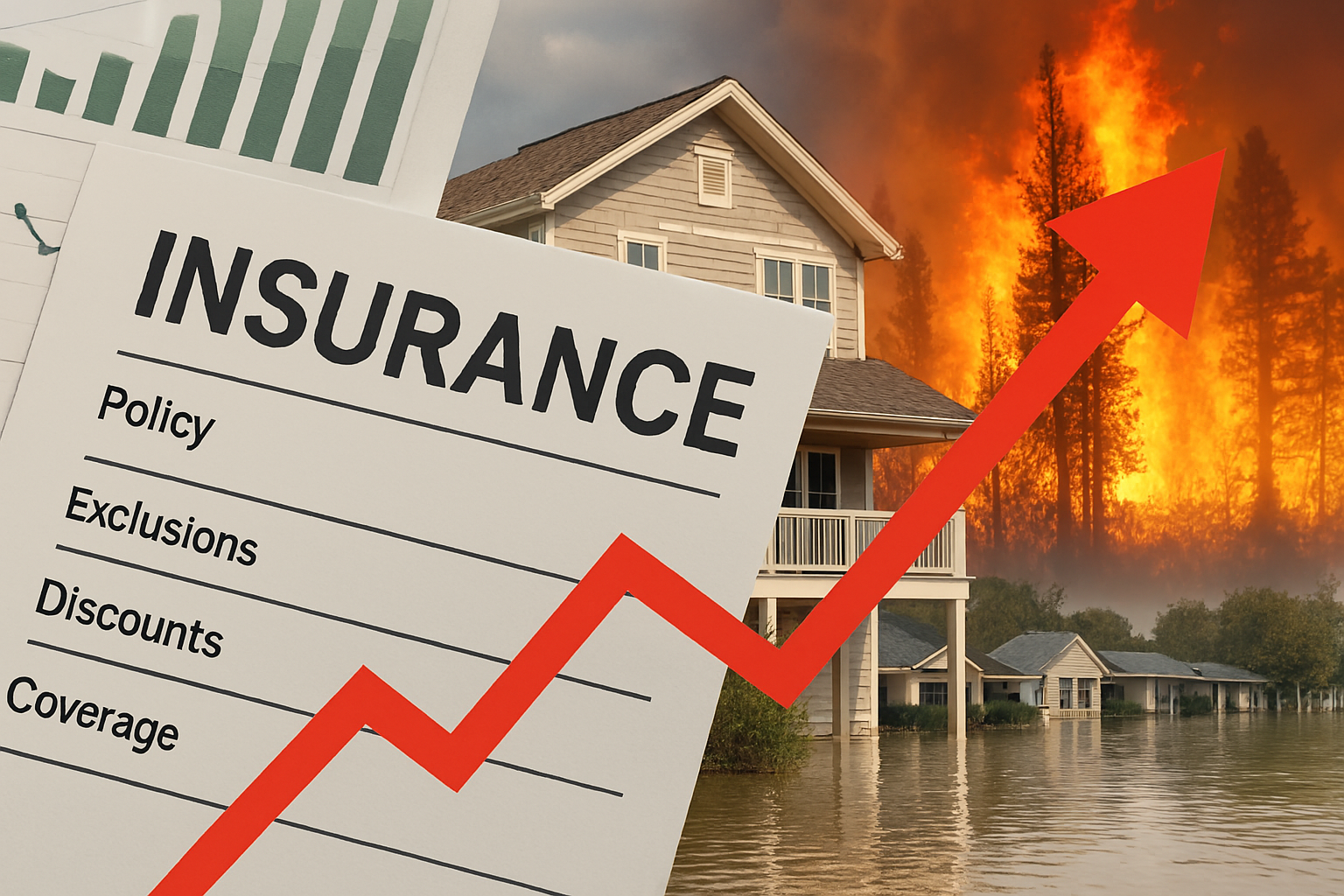
Rising insurance costs and climate threats converge — homeowners face mounting risks from storms, fires, and floods.
A New Reality for Homeowners
Insurance used to be something homeowners barely thought about. You paid your premium, filed a claim if disaster struck, and trusted your insurer to cover the damage. But climate change has rewritten the rules. Rising premiums, shrinking coverage, and insurers pulling out of high‑risk regions are reshaping affordability. For millions of homeowners, especially in coastal and wildfire‑prone areas, insurance is no longer a quiet background cost — it’s a front‑and‑center financial challenge.
In 2024 alone, the U.S. experienced 27 billion‑dollar disasters, from hurricanes to wildfires to floods. Each event pushed insurers to reassess risk, raise rates, or withdraw entirely. Homeownership now comes with a new question: Can you afford to insure your property against climate risk?
The Insurance Affordability Crisis
Premiums on the Rise
- Homeowners in Florida, California, and other climate‑exposed states have seen premiums jump by 15–30% annually.
- Deductibles are higher, exclusions are broader, and coverage limits are tighter.
For families already stretched by mortgage payments, property taxes, and maintenance costs, insurance hikes are tipping the balance.
Insurer Withdrawals
- Major insurers have exited entire markets. In California, wildfire risk has driven companies to stop issuing new policies.
- In Florida, hurricane exposure has led to similar withdrawals, leaving homeowners dependent on state‑backed insurers of last resort.
This leaves homeowners with fewer options, less competition, and higher costs.
Extreme Weather Events Driving the Shift
Insurance companies aren’t raising rates arbitrarily. They’re reacting to a surge in extreme weather events that cause billions in damages.
Hurricanes
- Hurricane Idalia (2023) slammed Florida, causing billions in insured losses.
- Storm surge and wind damage are becoming more frequent and more severe.
Wildfires
- The Maui wildfire (2023) destroyed entire neighborhoods, highlighting how fast and devastating fire can be.
- California continues to face annual wildfire seasons that stretch insurers’ capacity.
Floods
- Midwest flooding (2024–2025) has repeatedly damaged homes, infrastructure, and farmland.
- Flood insurance, once optional, is now essential in many regions.
Each disaster forces insurers to recalculate risk. The result? Higher premiums, stricter underwriting, and reduced availability.
Regional Impacts
Coastal Regions
- Rising sea levels and stronger hurricanes make coastal homes more expensive to insure.
- Storm surge maps are being redrawn, expanding the number of properties considered “high risk.”
Wildfire‑Prone Areas
- California, Colorado, and Hawaii face annual fire seasons.
- Insurers are demanding fire‑resistant materials, defensible space, and community‑level fire management.
Flood‑Exposed Regions
- Gulf Coast and Midwest homeowners face repeated flooding.
- Federal flood insurance programs are under strain, and private insurers are reluctant to step in.
The Ripple Effect on Homeownership
Insurance affordability isn’t just about premiums. It reshapes the entire housing market.
- Mortgage Access: Lenders require insurance. If coverage is unavailable or unaffordable, buyers can’t secure loans.
- Property Values: Homes in high‑risk areas lose value as insurance costs rise.
- Community Stability: Families may be forced to relocate, reshaping neighborhoods and local economies.
In short, insurance is now a gatekeeper for homeownership.
Policy & Industry Responses
Government Backstops
- Florida’s Citizens Property Insurance program acts as a safety net when private insurers withdraw.
- Similar programs exist in California, but they are financially strained.
Federal Reform
- Calls are growing for a national disaster insurance program to spread risk more evenly.
- Policymakers debate whether taxpayers should subsidize high‑risk properties.
Industry Innovation
- Parametric insurance pays out based on event triggers (e.g., wind speed, rainfall) rather than damage assessments.
- Insurers are experimenting with climate‑resilient underwriting, rewarding homeowners who invest in upgrades.
Preparing Homeowners for the Future
Homeowners can’t control hurricanes or wildfires, but they can take steps to reduce risk and manage costs.
Invest in Climate‑Resilient Upgrades
- Impact‑resistant windows and doors.
- Fire‑resistant roofing and siding.
- Flood‑proofing measures like raised foundations and improved drainage.
Explore Alternative Insurance Models
- Parametric policies for specific risks.
- Community‑based insurance pools.
Advocate for Policy Change
- Support local resilience initiatives.
- Push for stronger building codes and community‑level disaster planning.
Case Studies: Real Homeowner Challenges
Florida Coastal Homeowner
A family in Tampa saw their premium double in two years. Their insurer withdrew, forcing them into Citizens Property Insurance. They invested in hurricane shutters and roof reinforcements, but costs remain high.
California Wildfire Zone
A homeowner in Sonoma County lost coverage after their insurer withdrew. They joined a state‑backed plan but face higher deductibles. They cleared defensible space and upgraded to fire‑resistant materials, but premiums remain steep.
Midwest Floodplain
A family in Iowa faced repeated flooding. Their flood insurance premiums rose sharply, and their property value dropped. They elevated their home, but insurers remain cautious.
The Bigger Picture: Insurance as Climate Barometer
Insurance isn’t just a financial product. It’s a barometer of climate risk. Rising premiums and shrinking coverage are signals that climate change is no longer abstract — it’s here, reshaping daily life.
For homeowners, the challenge is clear: adapt, invest, and plan for resilience. For policymakers, the task is urgent: reform insurance systems to ensure affordability and stability. For insurers, the opportunity is real: innovate with new models that balance risk and coverage.
Conclusion
Insurance and climate risk are now inseparable. Rising premiums, insurer withdrawals, and extreme weather events are reshaping affordability and access. Homeownership in the 2020s and beyond will require not just financial planning, but climate resilience.
The question isn’t whether climate change will affect your insurance — it already has. The real question is how you’ll prepare.
✅ Homeowner Climate Insurance Checklist
- Review your policy annually — check for exclusions, deductibles, and coverage limits.
- Ask your insurer about discounts for climate‑resilient upgrades.
- Invest in resilience: hurricane shutters, fire‑resistant materials, flood‑proofing.
- Document your property: photos, receipts, and upgrade records help in claims.
- Explore alternative insurance models: parametric or community‑based pools.
- Check regional risk maps: flood zones, wildfire zones, storm surge areas.
- Maintain defensible space around your home in wildfire regions.
- Upgrade drainage systems to reduce flood risk.
- Stay informed about insurer withdrawals in your state.
- Advocate locally for stronger building codes and resilience policies.
📌 Sources:
- The Zebra – Extreme Weather Transforming Insurance
- Insurance Thought Leadership – Rising Rates & Extreme Weather 2025
- Yale Climate Connections – Insurance Rates & Climate Change
About the Author