A New Look at Single-Family Homes
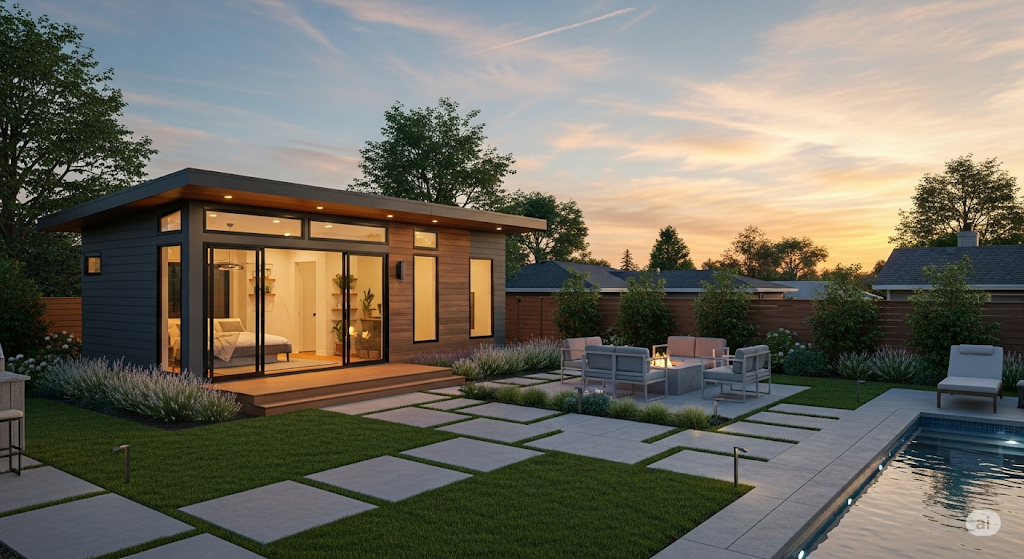
Homeowners are rethinking space as ADUs and highest and best use ideas reshape the market. Many single-family homes now sit on what appraisers call “under-improved” land. This means the lot has more potential utility than its current structure supports. Because zoning laws continue to loosen in states like California and Washington, the shift feels inevitable. Housing affordability drives the trend, but so does the rising need for elder care and multigenerational living through flexible “Granny Flats.” Buyers want options, and ADUs deliver them.
Valuation Factors That Shape ADU Potential
How Cost and Value Diverge in ADU Projects
Adding an ADU often costs around $150,000. However, the contributory value—the value it adds to the property—rarely matches the construction expense dollar for dollar. Appraisers study paired sales, which compare similar homes with and without ADUs. These comparisons reveal what the market truly pays. Although the numbers vary, many owners still gain long-term advantage because ADUs expand income potential. Therefore, the payoff often appears in cash flow rather than direct resale value.
Why Appraisers Use Contributory Value and Income Tools
Appraisers evaluate ADUs using three methods. The sales comparison method analyzes market data. The cost approach examines replacement cost. The income approach projects rental value. Although the income method was once limited, lenders now sometimes allow projected ADU rent to help buyers qualify. This shift changes everything. Because monthly income offsets higher mortgage rates, buyers gain more borrowing power.
Strategic Growth Through Highest and Best Use
House Hacking With ADUs and Highest and Best Use Plans
Modern house hacking uses ADUs in creative ways. Some owners live in the ADU and rent the main home. Others rent the ADU and use the extra income to offset mortgage stress. Both models optimize property utility. Although every plan differs, each helps owners navigate high interest rates. ADUs convert spare land into productive space. Therefore, buyers see stronger returns even in tight markets.
Flexible Properties Win in Today’s Resale Market
Demand for adaptable homes continues to climb. Buyers want private offices, guest suites, creative studios, or in-law spaces. ADUs offer this flexibility. Because post-pandemic lifestyles require versatile layouts, properties with ADUs command premiums. Many buyers pay more for homes that solve multiple problems at once. Although traditional layouts still sell, flexible ones sell faster and often higher.
Understanding Value Through Best-Use Thinking
When owners view their home as more than a structure, opportunities appear. Each yard, setback, and unused corner becomes potential. The principle of highest and best use encourages owners to evaluate land not for what it is, but for what it could support. ADUs transform static lots into income-producing assets. Therefore, homeowners gain more stability and more control over long-term value.
Conclusion: Think Utility, Not Just Shelter
Homes are no longer only places to live. They are platforms for opportunity. ADUs and highest and best use strategies create flexibility, income, and resilience. Stop viewing a house only as a home. Instead, look at the land and imagine how it can serve you.
About the Author