Storm clouds gather over Florida real estate as the 2026 housing market faces uncertainty and shifting conditions.
Introduction: Understanding the Florida Housing Market 2026
The Florida housing market 2026 can feel confusing. You may hear experts say the market is “normalizing.” Others warn about a crash. So what does it really mean for everyday homeowners, buyers, and renters?
The truth is more balanced than headlines suggest. Florida is not experiencing a nationwide-style collapse like 2008. However, some areas—especially coastal and investor-heavy cities—are seeing noticeable price declines. Understanding why this is happening can help you make smarter decisions.
Let’s break it down in plain language.
⸻
Why Are Some Florida Home Prices Falling?
During the pandemic, many people moved to Florida. Interest rates were low. Investors were buying rental homes. As a result, home prices rose very quickly.
Now, conditions have changed:
• Mortgage rates are much higher than they were in 2021–2022.
• Insurance costs have increased sharply.
• Investors are buying fewer homes.
Because of these changes, buyer demand has slowed. When fewer buyers compete for homes, prices often fall. In some counties like Cape Coral and parts of Southwest Florida, prices have dropped by 10% or more from recent peaks.
This does not mean every home is losing 40% of its value. However, some foreclosure sales and distressed properties are showing large discounts compared to peak prices.
⸻
What Are Foreclosures and Why Do They Matter?
A foreclosure happens when a homeowner cannot keep up with mortgage payments and the lender takes back the home. The property is then sold, often at auction.
When foreclosure sales increase, they can lower prices in the area. That’s because auction prices are usually below regular market value. Buyers use those lower sales as comparisons when negotiating other homes.
Right now, Florida is seeing some increase in distressed sales, especially in areas that had the biggest price jumps during the pandemic.
⸻
The Big Issue: Insurance Costs
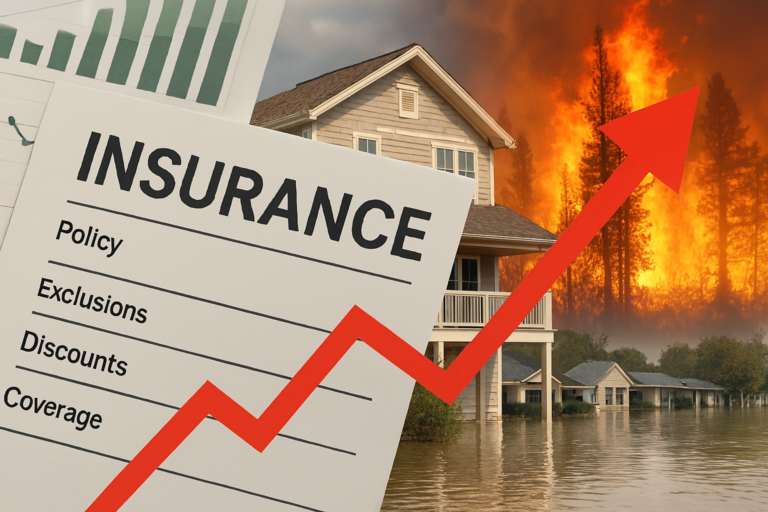
One of the most important factors in the Florida housing market 2026 is insurance.
Florida has some of the highest homeowners insurance premiums in the country. In many cases:
• Average annual insurance costs are over $5,000.
• In high-risk coastal areas, bills can reach $10,000 or more.
When insurance becomes very expensive, owning a home becomes harder to afford. Even if your mortgage payment is manageable, rising insurance premiums can strain a household budget.
In some areas, insurance companies are also limiting coverage. This makes it harder to buy or refinance a home, because lenders require insurance.
⸻
Renting vs. Buying in 2026
Many families are asking: Is it smarter to rent right now?
In some Florida cities, the monthly cost of owning a home is now slightly higher than renting a similar property. Owning includes:
• Mortgage payment
• Property taxes
• Insurance
• Maintenance
Renting usually includes only one monthly payment.
For people who value flexibility or want to avoid risk while prices adjust, renting can be a strategic choice. On the other hand, buyers planning to stay long-term may still benefit from ownership once prices stabilize.
The key is time horizon. If you plan to stay 10 years or more, short-term price swings matter less.
⸻
Are Investors Leaving Florida?
During the housing boom, many investors bought homes to rent out. Now, some of them are slowing down purchases.
Why?
• Higher interest rates reduce profits.
• Insurance and maintenance costs are rising.
• Rent growth has slowed in some cities.
When investors buy fewer homes, there is less competition for regular buyers. That can help balance the market, but it can also lead to price declines in areas that depended heavily on investor demand.
⸻
Is This Another 2008 Crash?
Most experts agree this is not the same situation as 2008. Back then:
• Lending standards were much looser.
• Many buyers had risky loan products.
• Large numbers of homeowners were deeply underwater.
Today, most homeowners have fixed-rate mortgages and built-up equity. Nationally, only a small percentage of homes are significantly underwater.
However, certain Florida cities that saw extreme price growth are more vulnerable. Local conditions matter more than national headlines.
⸻
What Should Buyers and Sellers Do?
If you are a buyer:
• Compare monthly ownership costs carefully.
• Get insurance quotes before making an offer.
• Focus on long-term affordability, not short-term appreciation.
If you are a seller:
• Price realistically based on recent sales.
• Be prepared for longer listing times.
• Understand that peak 2022 pricing may no longer apply.
Education and patience are more important than urgency in 2026.
⸻
Conclusion: What the Florida Housing Market 2026 Means for You
The Florida housing market 2026 is adjusting after a historic boom. Some areas are seeing price declines, especially where investor activity was high and insurance costs are steep. However, this is not a uniform statewide crash.
For everyday buyers and homeowners, the most important lessons are simple:
• Understand total ownership costs.
• Pay attention to insurance.
• Think long term.
Real estate markets move in cycles. By focusing on affordability and fundamentals, you can make decisions based on facts—not fear.
About the Author