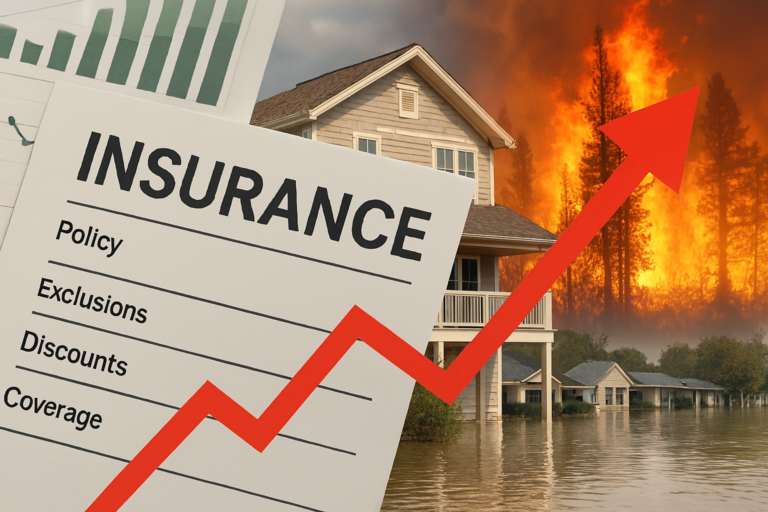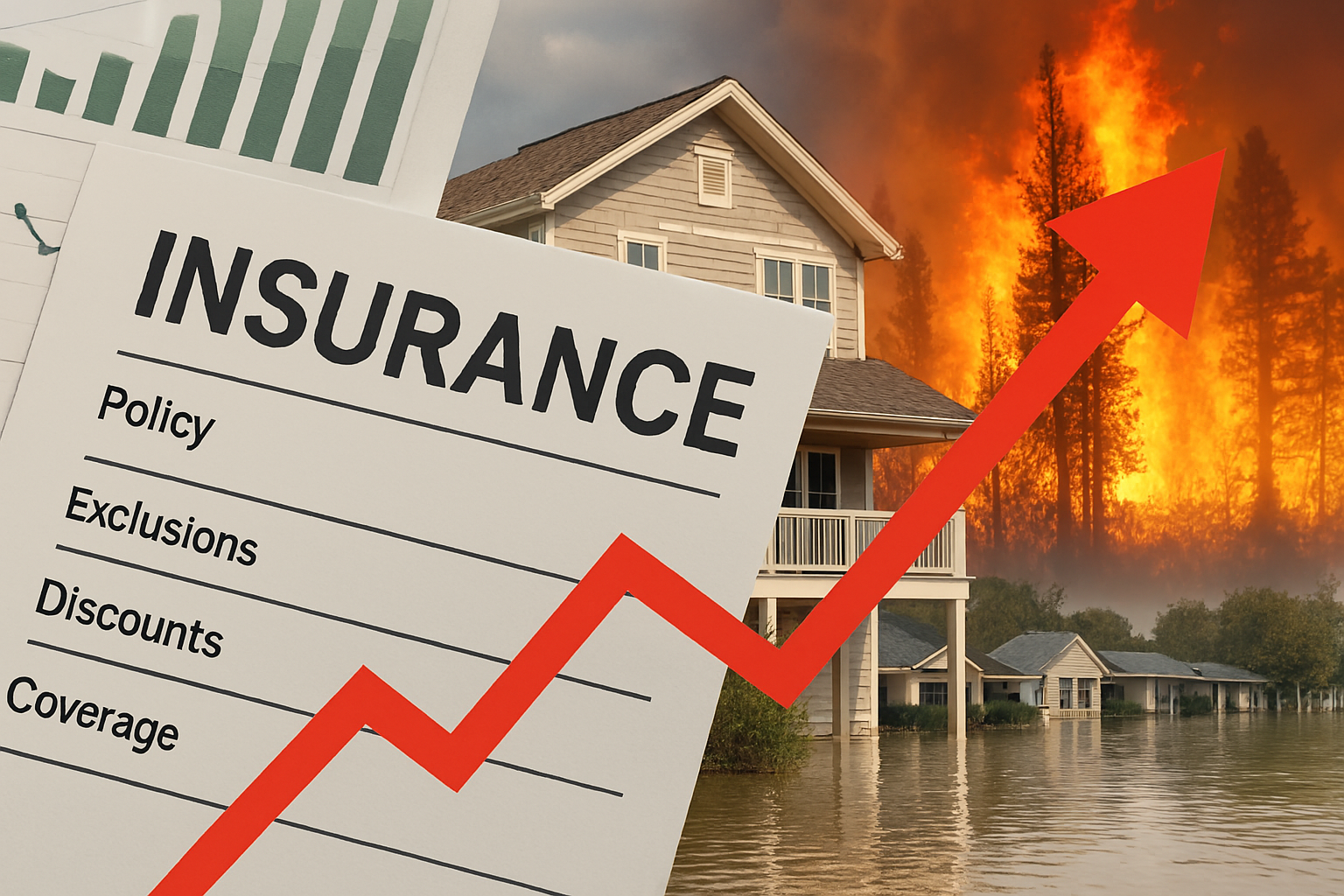
Rising insurance costs and climate threats converge — homeowners face mounting risks from storms, fires, and floods.
Before diving into the checklist, it’s important to understand why climate resilience is no longer optional for homeowners. With insurance premiums rising and coverage shrinking in high-risk areas, proactive preparation is the new standard. Whether you live near the coast, in wildfire zones, or flood-prone regions, insurers are increasingly demanding proof of risk mitigation. This checklist offers practical, actionable steps to help you protect your home, maintain coverage, and navigate the evolving landscape of climate-related insurance. Think of it as your roadmap to resilience — one that safeguards both your property and your peace of mind.
1. Review Your Policy Annually
Insurance policies are not static — exclusions, deductibles, and coverage limits can change from year to year. Reviewing your policy annually ensures you understand what is covered and what is not, especially as insurers adjust terms in response to climate risks. Pay close attention to whether flood, wind, or wildfire damage is included, and confirm your deductible levels. A yearly review also helps you catch hidden exclusions that could leave you exposed after a disaster. Treat this as a financial health checkup for your home.
2. Ask Your Insurer About Discounts for Climate‑Resilient Upgrades
Many insurers now offer premium discounts for homeowners who invest in resilience measures. These can include installing hurricane shutters, upgrading to impact‑resistant windows, or using fire‑resistant roofing materials. By asking your insurer directly, you may uncover incentives that offset the upfront cost of upgrades. Discounts not only reduce your annual premium but also signal to insurers that your property is lower risk, which can help keep coverage available in high‑risk regions.
3. Invest in Resilience: Hurricane Shutters, Fire‑Resistant Materials, Flood‑Proofing
Resilience upgrades are more than cosmetic improvements — they are protective investments. Hurricane shutters can prevent catastrophic wind damage, fire‑resistant siding reduces ignition risk, and flood‑proofing measures like raised foundations or sump pumps can save thousands in repair costs. These upgrades often pay for themselves by reducing damage during extreme weather events and making your property more attractive to insurers. Think of resilience as a long‑term safeguard for both your home and your financial stability.
4. Document Your Property: Photos, Receipts, and Upgrade Records
When disaster strikes, claims are processed faster and more smoothly if you have thorough documentation. Take clear, dated photos of your home’s interior and exterior, and keep receipts for major upgrades or repairs. Maintain a digital record of improvements such as roof replacements, drainage installations, or fire‑resistant materials. This evidence strengthens your case with insurers, reduces disputes, and ensures you receive fair compensation. Documentation is your proof of stewardship and preparedness.
5. Explore Alternative Insurance Models: Parametric or Community‑Based Pools
Traditional insurance isn’t the only option. Parametric insurance pays out based on measurable triggers — such as wind speed or rainfall — rather than lengthy damage assessments. Community‑based insurance pools allow neighborhoods or associations to share risk collectively. These models can provide faster payouts and more predictable coverage in climate‑exposed regions. Exploring alternatives gives homeowners more flexibility and may offer solutions when traditional insurers withdraw from high‑risk markets.
6. Check Regional Risk Maps: Flood Zones, Wildfire Zones, Storm Surge Areas
Risk maps are constantly updated as climate conditions change. Flood zones expand, wildfire boundaries shift, and storm surge areas grow with rising sea levels. Checking these maps helps you understand your property’s exposure and anticipate insurance changes. It also guides smart investments in resilience upgrades. Many local governments and FEMA provide online tools to identify your risk zone. Staying informed ensures you aren’t caught off guard when insurers adjust premiums or coverage requirements.
7. Maintain Defensible Space Around Your Home in Wildfire Regions
In wildfire‑prone areas, insurers increasingly require homeowners to maintain defensible space — a buffer zone free of flammable vegetation and debris. Clearing brush, trimming trees, and using fire‑resistant landscaping can dramatically reduce ignition risk. This not only protects your home but also demonstrates compliance with insurer guidelines. Defensible space is a practical, low‑cost measure that can save lives and property, and it often qualifies you for reduced premiums or continued coverage.
8. Upgrade Drainage Systems to Reduce Flood Risk
Flooding is one of the most common and costly climate risks. Upgrading your drainage system — from installing French drains to adding sump pumps or backflow valves — can prevent water damage during heavy rains. Proper grading around your home and maintaining gutters also reduce flood exposure. Insurers look favorably on properties with proactive flood‑proofing, and these upgrades can lower premiums or prevent denial of coverage. Drainage improvements are a critical line of defense against rising water.
9. Stay Informed About Insurer Withdrawals in Your State
Insurers are increasingly withdrawing from high‑risk states like Florida and California. Staying informed about these market shifts helps you anticipate changes before they affect your coverage. Follow state insurance regulators, local news, and industry updates to track insurer exits. If your insurer withdraws, you’ll need to act quickly to secure alternative coverage, often through state‑backed programs. Awareness is key to avoiding gaps in coverage that could leave you financially vulnerable.
10. Advocate Locally for Stronger Building Codes and Resilience Policies
Individual action matters, but community resilience is even more powerful. Advocating for stronger building codes, improved zoning, and resilience policies ensures that entire neighborhoods are better protected. Local governments often respond to homeowner pressure when setting standards for construction, drainage, and fire management. By participating in community meetings or resilience initiatives, you help shape policies that reduce risk and stabilize insurance markets. Advocacy is a way to protect not just your home, but your legacy and community.
About the Author