Why Housing Affordability Now Defines the Market
Housing affordability has become a defining issue in today’s real estate market. Buyers face higher prices, tighter inventory, and stubborn mortgage rates.
As a result, many households delay ownership. Others exit the buying market entirely. This shift changes how homes are bought, sold, and rented.
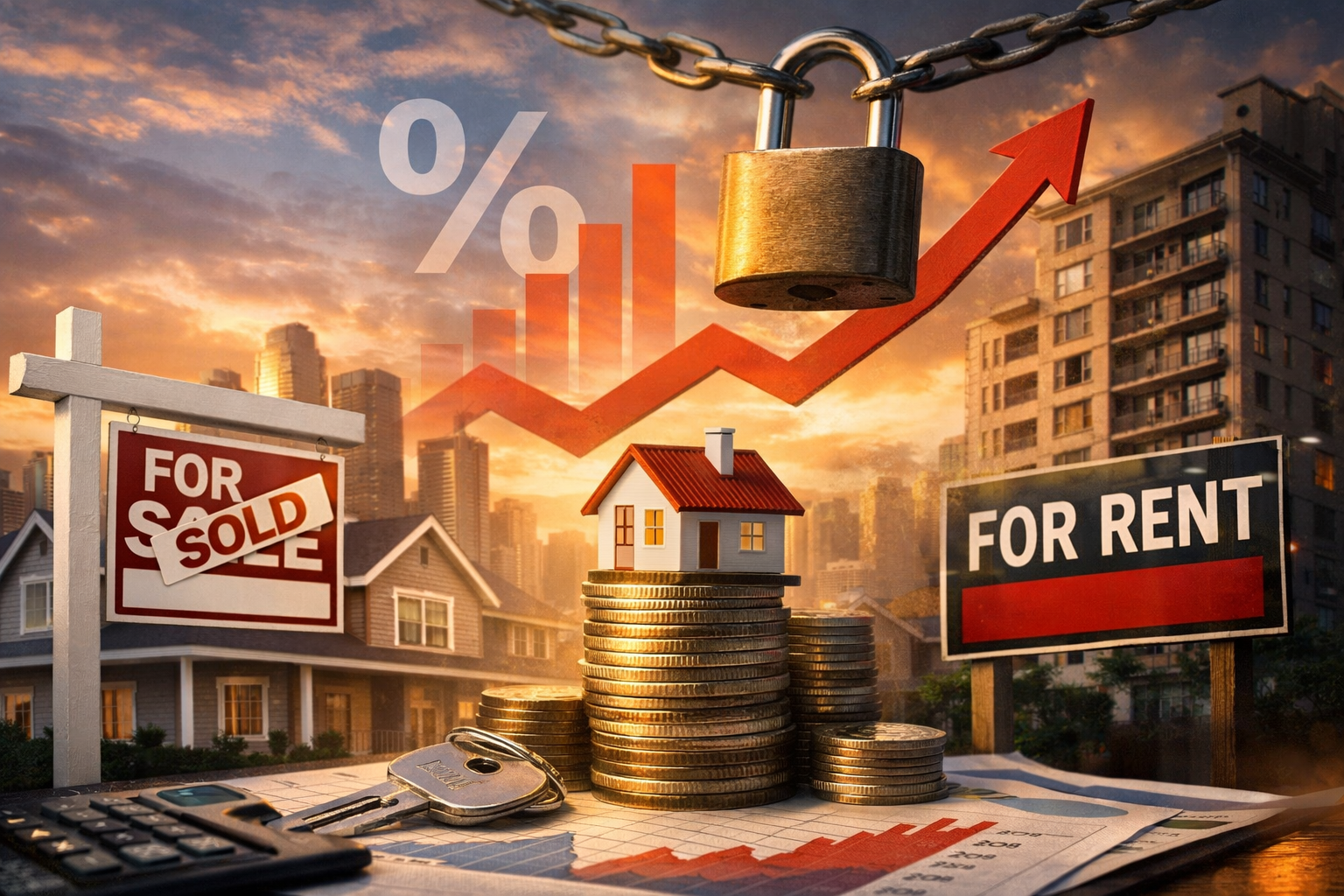
At the same time, the “lock-in effect” reshapes supply. This term describes homeowners holding low-rate mortgages who resist selling. Consequently, fewer homes hit the market, even when demand exists.
The Lock-In Effect Reshaping Sales, Supply, and Confidence
The lock-in effect suppresses home sales across many regions. Owners with 3% mortgages hesitate to trade up into 7% loans. For a deeper breakdown, see our guide on navigating the lock-in effect for move-up buyers.
Therefore, inventory stays tight, even as buyer interest remains steady.
This dynamic reduces transaction volume. It also distorts pricing signals. When fewer homes sell, price discovery slows.
As a result, buyers struggle to gauge fair value, while sellers anchor to peak-era prices.
Rising Rental Demand Accelerates Market Imbalance
As buying becomes harder, renting absorbs the pressure. Many would-be buyers now lease longer than planned.
Consequently, rental demand rises across urban and suburban markets.
This demand pushes rents upward. In competitive metros, vacancy rates compress quickly.
Although new multifamily supply helps, it often lags demand or targets higher-income renters.
Housing Affordability Pressures Buyers and Renters Alike
Housing affordability challenges no longer affect just buyers. Renters now feel the strain as well.
Income growth fails to match housing costs in many regions.
In cities, rent consumes a larger share of monthly income. In suburbs, commuting costs offset modest housing savings.
Therefore, households face fewer truly affordable options, regardless of tenure.
Regional Housing Affordability Gaps Shape Migration Trends
Housing affordability varies sharply by region. Coastal cities remain expensive despite slower price growth.
Meanwhile, secondary markets attract migrants seeking relief.
Cities in the Southeast and Midwest gain population. However, rapid inflows strain local housing stock.
Over time, this migration narrows affordability gaps, exporting pressure rather than eliminating it.
Policy and Market Responses to Housing Affordability Stress
Governments experiment with affordability tools. These include down-payment assistance, zoning reform, and targeted subsidies.
However, policy effects take time to materialize.
Meanwhile, developers adapt. Some pivot to smaller units or build-to-rent communities.
Investors optimize returns by focusing on workforce housing, which serves middle-income renters.
Future Outlook: Where Housing Affordability May Head Next
Mortgage rates may ease, but sharp drops appear unlikely soon. Home prices could stabilize, yet supply remains constrained.
Therefore, affordability gains may be gradual rather than dramatic.
Long term, delayed ownership reshapes wealth building. Younger households rent longer, affecting mobility and family formation.
Ultimately, housing affordability will influence economic growth, not just real estate cycles.
Key Takeaways at a Glance
- Limited inventory keeps prices elevated
- High rates reinforce the lock-in effect
- Rental demand rises as ownership slips out of reach
- Regional shifts redistribute, not resolve, affordability stress
Summary & Call to Action
Housing affordability now sits at the center of real estate decision-making. Buyers, renters, investors, and policymakers all feel its weight.
Understanding these forces helps you plan smarter moves.
👉 Stay informed. Track market shifts. And adjust your housing strategy before pressure becomes permanence.
About the Author