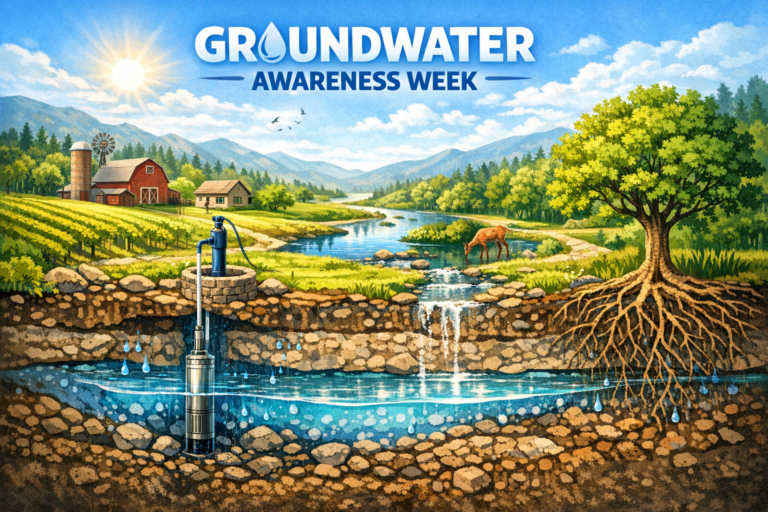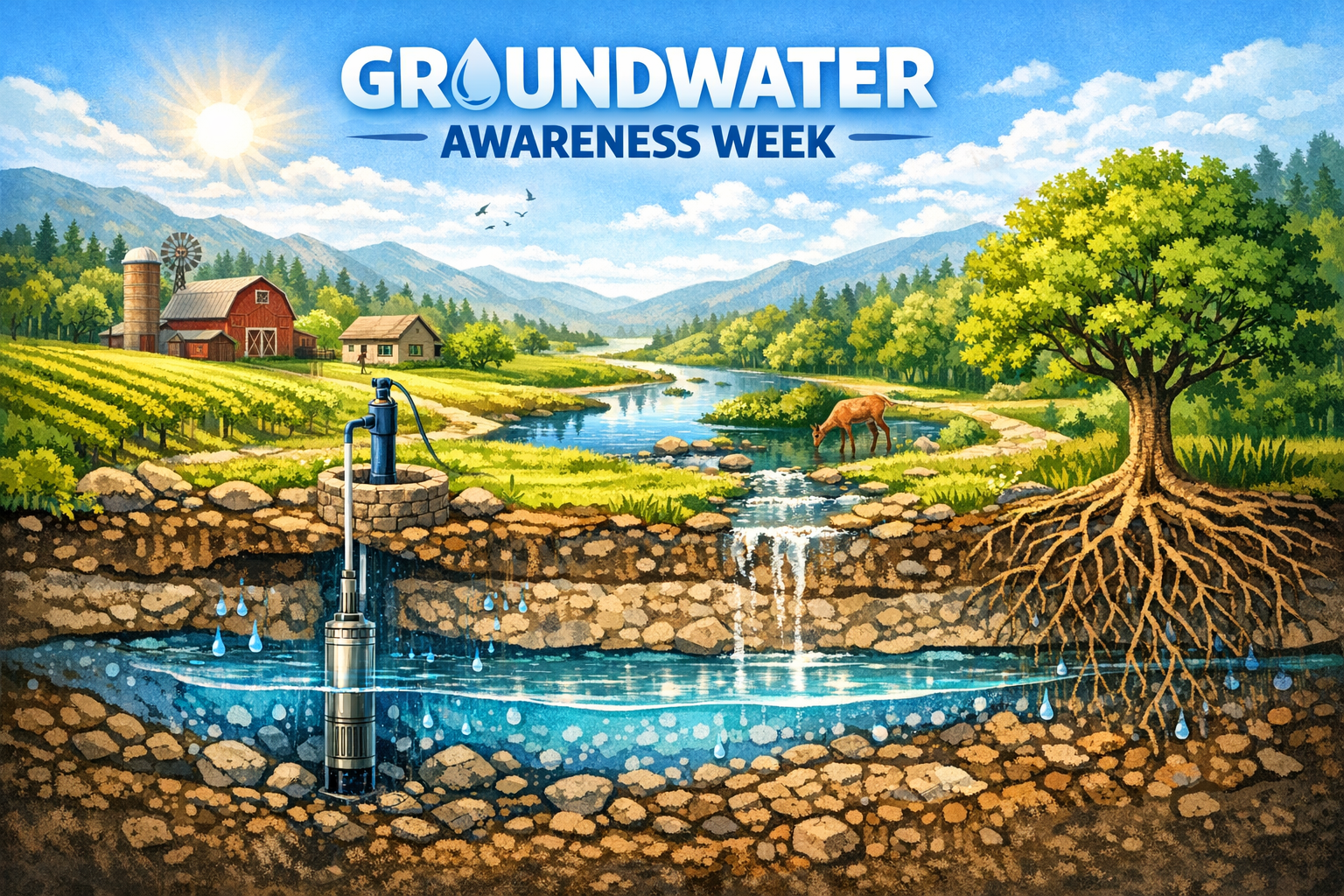
Groundwater Awareness Week highlights the hidden water beneath our feet and the importance of protecting this vital resource.
During National Groundwater Awareness Week, many people focus on drinking water safety. However, few realize how deeply groundwater and real estate are connected. Beneath every city, suburb, and rural community lies a complex network of underground water reserves called aquifers.
These underground resources quietly influence property values, development decisions, and environmental risks. In many cases, groundwater conditions determine whether land can be developed, financed, or insured.
For property owners, investors, and developers, understanding groundwater is not just environmental knowledge. It is a critical component of real estate due diligence.
What Is Groundwater?
Groundwater is water stored beneath the Earth’s surface in soil, sand, and rock formations. These formations are called aquifers, which act like natural underground reservoirs.
Rain and snow slowly seep through the ground. As the water moves downward, it fills pores and fractures in rock layers. Over time, large volumes of water accumulate underground.
This hidden supply becomes a major source of freshwater for communities. In fact, groundwater provides drinking water for tens of millions of homes across the United States.
From a real estate perspective, groundwater often determines whether a property can rely on private wells or municipal water systems.
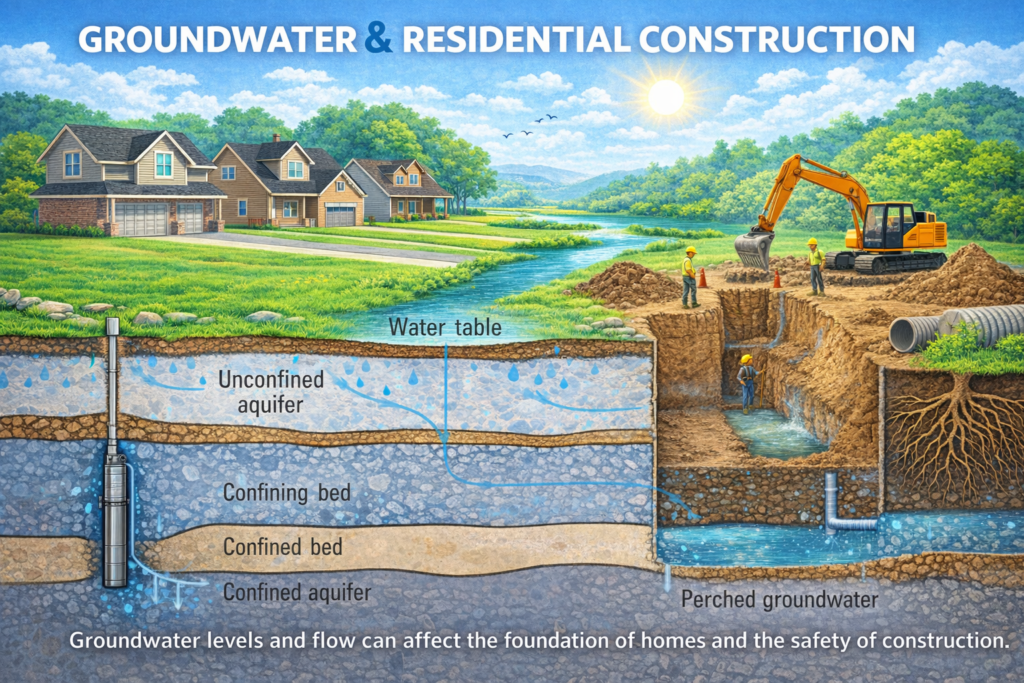
Below the surface, the image reveals geological layers: brown topsoil, a visible water table, an unconfined aquifer, a confining bed, and a deeper confined aquifer. A pump well taps into the lower aquifer, and tree roots stretch downward toward the water. Blue arrows indicate groundwater flow, and perched water fills the trench at the construction site, illustrating how groundwater can impact excavation and drainage.
Why Groundwater Matters for Property Owners
For homeowners and investors, groundwater affects several aspects of property ownership.
First, groundwater influences water supply reliability. In rural and suburban areas, many homes depend on private wells. If aquifers become depleted or contaminated, the property’s water source can become unsafe or unusable.
Second, groundwater quality can affect property values. Contaminated groundwater near industrial sites, landfills, or gas stations may create environmental liabilities.
Third, groundwater conditions impact construction feasibility. Developers must evaluate soil drainage, water tables, and aquifer protection zones before building.
Consequently, groundwater conditions often shape land development patterns and neighborhood growth.
The Hidden Role of Aquifers in Real Estate Development
Aquifers quietly support large portions of the built environment. Cities, suburbs, and agricultural communities all rely on groundwater reserves.
Developers and planners consider groundwater during several stages of development.
For example, high groundwater tables can complicate construction. Foundations, basements, and underground parking structures require careful waterproofing when groundwater sits close to the surface.
Similarly, drainage planning must account for groundwater flow. Poor planning can lead to flooding, structural damage, or soil instability.
Because of these risks, environmental studies are common during large development projects. These assessments evaluate groundwater conditions before construction begins.
Environmental Risks That Affect Property Value
Groundwater contamination can create long-term risks for property owners and investors.
Several sources commonly contribute to groundwater pollution.
Industrial chemicals, leaking underground fuel tanks, agricultural fertilizers, and aging septic systems can all introduce contaminants into aquifers.
Once pollution reaches groundwater, cleanup becomes difficult and expensive. Contamination often spreads slowly underground, affecting surrounding properties.
For real estate investors, environmental contamination may trigger several consequences.
These include:
Reduced property value
Mandatory environmental remediation
Legal liability for cleanup costs
Difficulty obtaining financing or insurance
Because of these risks, environmental disclosures and inspections play a major role in modern real estate transactions.
Groundwater and Real Estate Due Diligence
Smart buyers and investors often investigate groundwater conditions before purchasing property.
Due diligence may include environmental site assessments, water quality testing, and historical land-use research.
A Phase I Environmental Site Assessment is commonly used in commercial real estate transactions. This report identifies potential contamination risks associated with a property’s past use.
If concerns appear, further testing may follow. Soil and groundwater sampling can confirm whether contamination exists.
While these studies add cost to transactions, they protect buyers from unexpected environmental liabilities.
For large developments, groundwater studies also help determine whether projects require stormwater management systems, drainage improvements, or aquifer protection measures.
Groundwater and Climate Resilience
Groundwater is becoming more important as climate conditions change.
Extreme weather patterns are affecting water availability across many regions. Droughts, shifting rainfall patterns, and population growth are increasing pressure on groundwater reserves.
In response, many communities are adopting sustainable groundwater management strategies.
These strategies include aquifer recharge programs, water conservation policies, and advanced monitoring systems.
For real estate markets, water security is emerging as a long-term factor in property value.
Areas with reliable water supplies tend to remain attractive to residents and businesses. Meanwhile, regions facing water shortages may experience development constraints.
As a result, groundwater management is increasingly linked to urban planning and housing growth.
What Property Owners Can Do to Protect Groundwater
Although groundwater exists beneath the surface, property owners still play a role in protecting it.
Simple actions can help reduce contamination risks and preserve local water resources.
These actions include:
Maintaining septic systems regularly
Avoiding improper chemical disposal
Reducing fertilizer and pesticide use
Managing stormwater runoff responsibly
Testing private well water periodically
Community awareness also matters. Public education programs, environmental regulations, and responsible development all contribute to groundwater protection.
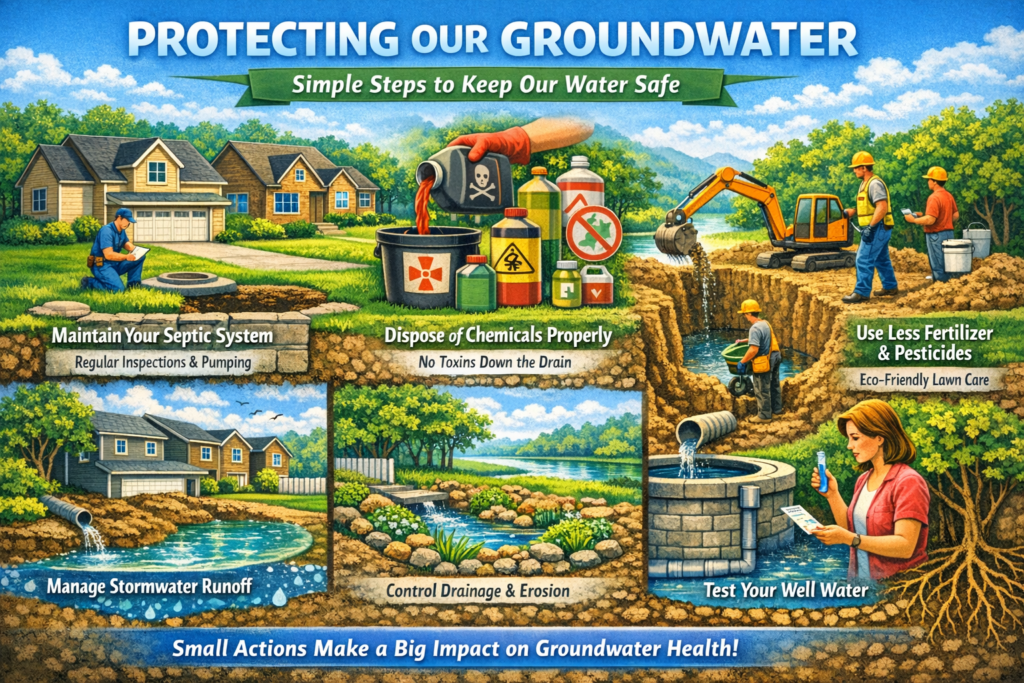
Maintain Your Septic System
Dispose of Chemicals Properly
“No Toxins Down the Drain.”
Use Less Fertilizer & Pesticides
Manage Stormwater Runoff
Test Your Well Water
Why Groundwater Awareness Matters for Real Estate
Groundwater may be invisible, but its influence on real estate is significant.
From drinking water safety to environmental liability, underground water systems shape how land is used and valued.
Investors, developers, and homeowners who understand groundwater risks gain a strategic advantage. They can make better decisions about site selection, property maintenance, and environmental compliance.
During National Groundwater Awareness Week, it is worth remembering that some of the most important real estate risks lie below the surface.
Understanding groundwater is not just environmental awareness. It is a critical part of responsible property ownership and real estate investment.
Summary
Groundwater plays a quiet but powerful role in the real estate market. It affects property values, development feasibility, environmental risk, and long-term water security.
Because of these connections, buyers and investors should consider groundwater conditions during property research and due diligence.
As communities grow and environmental pressures increase, groundwater awareness will become even more important for property owners.
The smartest real estate decisions often begin with understanding what lies beneath the land.
Links
Groundwater: It’s at the Root of Safe Water Consumption – USDA
Groundwater Awareness Week | Drinking Water | CDC
National Groundwater Awareness Week
About the Author